AI guest communication on the website: How Regensburg Tourismus GmbH answers its guest inquiries as a DMO
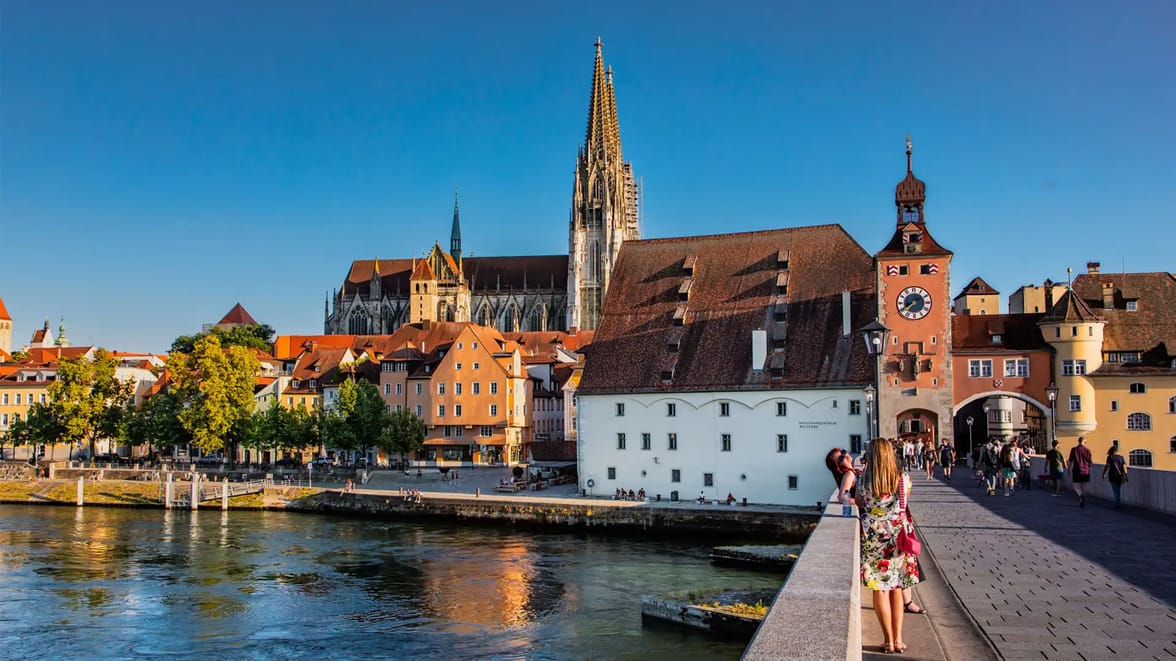
When asked about Regensburg Zoo, generic AI models are happy to make something up: that it is near the Donau-Einkaufszentrum. There is no zoo in Regensburg. For a city that advertises with its cathedral, Stone Bridge, and two UNESCO World Heritage titles, even a single invented answer would be a misleading claim that would immediately be questioned. Regensburg Tourismus GmbH has therefore based its guest communication on exactly one reliable source: its own website.. Since 2023, RTG has relied on branchly's Chat and hybrid Search: On tourismus.regensburg.de both answer guest questions directly from the destination's curated content, in more than one hundred languages and around the clock. Of the inquiries from the last twelve months, 94.6% were fully answered, and in the last month, 7.2% of all website visitors actively interacted with the Chat or Search. For the concept, which among other things integrates Easy language, RTG received the ADAC Tourism Award Bavaria in 2025.
Why classic chatbots were not enough
The path there began with many obstacles. Like many destinations, RTG relied on chatbots from 2020 to relieve the Tourist Information team and offer a service around the clock. The promise did not hold. The models at the time followed a fixed question-and-answer schema: every question variant, every answer path was created by hand, and for inputs that no one had foreseen, the AI simply had no answer. “The problem with the previous models was that we had to maintain the knowledge base ourselves,” says Carolyn Molski. At RTG, she heads Marketing, DACH as well as Digitalization and AI, and is therefore responsible for exactly the area in which the destination's guest communication is decided. What was intended as relief became a second content maintenance task alongside the website: work that someone had to manage on top of their own job.
Then there was the trust problem. Speaking on behalf of the city to guests means not being allowed to tolerate any mistakes. A single invented answer, like the ones generic AI models give to the zoo question, is enough, and the guest loses trust in the destination's official voice. And guests' expectations have only grown in recent years: the answer should come immediately, around the clock, and in their own language. No team member speaks six languages fluently, and on the phone, availability ended with opening hours anyway, although many guests plan their trips precisely in the evenings and on weekends.
What is added in Germany: destinations and municipalities move cautiously when it comes to digitalization; data protection and the city's IT security set tight limits. Solutions that process data overseas are out of the question from the outset for a municipal GmbH. RTG therefore needed a system that gets by without manual knowledge maintenance, answers only from verified sources, serves every language of guests, and at the same time meets strict requirements for data protection and IT security.
From skepticism to a three-year partnership
RTG has been a branchly customer for over three years and was thus one of the very first destinations to launch a generative AI chat on the German market. Before that, the team was explicitly skeptical. “I don't want yet another person promising me the moon,” Molski describes her attitude at the beginning of the collaboration. In the end, a simple, consistent idea convinced her: the knowledge base is the website itself. Everything that the Chat or Search outputs comes from RTG's curated pages and is therefore researched and correct. Maintain once, both interfaces learn along with it.
The implementation proceeded step by step and grew with the requirements. First the Chat went live, then the search bar was added to the homepage, later the telephony connection, then the Regiondo integration for city tours and tickets, and currently the digital guest folder is being created. At every step, the basic principle remained the same: no second system, no second knowledge base, but one data foundation that feeds all channels. Beyond its own website, the knowledge base was also expanded to include secondary and external sources that were reviewed by the RTG team, for example on parking options or the surrounding area.
The collaboration itself has become an ongoing dialogue over the years. RTG provides requirements from guest contact, branchly implements them, and both sides have been learning from each other for three years. This is how Easy language in the Chat came about, for which branchly and RTG worked with a specialist to develop the implementation, a project with which the partnership won the ADAC Tourism Award Bavaria in 2025. As a destination without the budgets of Cologne, Hamburg, or Berlin, RTG approaches digitalization in deliberately small but visible steps, and the hurdles of municipal IT, from firewalls to security precautions, are honestly part of everyday life.
One system for Chat, Search, and telephony
At the center are Chat and hybrid Search, which guests use equally. On the homepage of tourismus.regensburg.de, there are therefore two entry points: the familiar search bar for guests who expect “no robot,” and the chat bubble for everyone who prefers to ask in dialogue. Both are used about half the time. “Luckily, we implemented both, otherwise we probably wouldn't have so many successful inquiries,” says Molski. “All information that the Chat or Search outputs on the website is researched and correct.”
The Chat automatically detects the language of the request and answers in the local language, from English to Dutch and Italian to Czech. Easy language is also integrated. The destination's booking systems are directly integrated into the dialogue: via the Regiondo integration, guests receive city tours with date, price, and direct booking link as selectable cards in the Chat, plus current events and weather information. In total, 33 curated sources feed the knowledge base, from UNESCO World Heritage to parking options to walks through the old town.
In addition, a telephony connection with six languages runs outside opening hours. Around 200 calls per month are successfully handled by the AI; requests that remain open end up as a summary with the team, which then calls back in a targeted way the next morning. The decisive point is that the calls flow through the same data foundation. “We pull all phone scripts through the platform and thereby see different user behavior between guests who search on the website and guests who call,” says Molski. “Are they the same topics? Are they more complex requests?” RTG learns from every channel without maintaining a second system: “At the end of the day, as a DMO, I am satisfied because I had no extra effort.” As a next step, a digital guest folder is currently being created that picks up guests from hotel check-in with tailor-made programs from the same data.
Figures from guest contact
The figures come from RTG's ongoing application:
|
Metric |
Value |
Time period |
|---|---|---|
|
Fully answered |
94.6% |
Last 12 months |
|
Interaction rate |
7.2% of website visitors interact with the AI interfaces |
Last 30 days |
|
Clicks on ticket and booking pages |
5,022 on event tickets, 2,765 on the booking portal for overnight stays |
Last 12 months |
|
Languages in Chat |
10+ detected (93% German, 7% international) |
Last 30 days |
At least as revealing as the metrics themselves for RTG is what shows behind them. Guests no longer search only for opening hours: they ask about events on the weekend, about parking, about the perfect day trip with children, and the AI leads them directly to ticket purchase. Almost 8,000 clicks on event tickets and the booking portal for overnight stays in twelve months show that the dialogue regularly turns into bookable actions. The Tourist Information team is relieved of standard inquiries and has time for the cases where personal interaction matters. And the inquiries themselves have become data material from which RTG builds its marketing: “Regensburg is beautiful and a UNESCO World Heritage site. But perhaps that is not what we need to put at the center, but rather that it is a vibrant city,” says Molski.
What other destinations can learn from this
Perhaps the most important takeaway lies beyond the individual metric. “We are all so rich in data and do far too little with it,” Molski describes an industry that collects inquiries, phone calls, and visitor focus areas without evaluating them. In Regensburg, insights from Chat, Search, and telephony now flow directly into the print magazine, website content, and the destination's own discoverability in AI portals.
Two topics will shape the coming years. First, visibility in AI itself: guests increasingly plan trips in dialogue with language models, and the destination that cannot be found there loses the first contact. Second, the destination's own website remains the reliable reference point. It is no longer the place of decision, but the place of confirmation, and, according to Molski, it must be able to “speak with AI.” Together, both create the future vision: a website that, as a curated source, answers both guests and AI systems, and an on-site team that delivers the encounter that no machine can replace. The insider tips, “which corner you have to turn in Regensburg,” remain human knowledge.
Frequently asked questions about AI guest communication at Regensburg Tourismus
How does Regensburg Tourismus GmbH handle guest inquiries with AI?
Since 2023, RTG has relied on branchly Chat and hybrid Search on tourismus.regensburg.de. Both interfaces answer guest questions directly from the destination's curated content — in more than one hundred languages and around the clock.
Where do the AI chat answers come from?
Exclusively from the RTG website and 33 additional curated sources reviewed by the team. Everything the Chat or Search outputs is researched and correct — no manual knowledge maintenance in a second system.
How successful is the AI guest communication?
Of the inquiries from the last twelve months, 94.6% were fully answered. In the last 30 days, 7.2% of all website visitors actively interacted with the Chat or Search.
Does it also work by phone?
Yes. Outside opening hours, a telephony connection with six languages takes over. Around 200 calls per month are successfully handled by the AI; open requests end up as a summary with the team, which calls back the next morning.
What award did the project receive?
For the concept, which integrates Easy language among other things, RTG received the ADAC Tourism Award Bavaria in 2025.
What does such a solution cost for destinations?
RTG approaches digitalization in deliberately small, visible steps — even as a destination without the budgets of Cologne, Hamburg, or Berlin. Contact branchly for an individual quote for your destination.
Related podcast episode
AI in Tourism: Carolyn Molski on Smart Guest Communication with branchly | Branch Out #4
Welcome to a new episode of Branch Out, the podcast for AI and Marketing! In today's episode, we welcome Carolyn Molski, Head of Marketing, DACH as well as Digitalization and AI at Regensburg Tourismus GmbH. Caro give…
Listen to podcast episode