AI chatbot
What is an AI chatbot? Learn how AI chatbots work, how they differ from rule-based bots, and why branchly achieves 10× higher interaction rates.
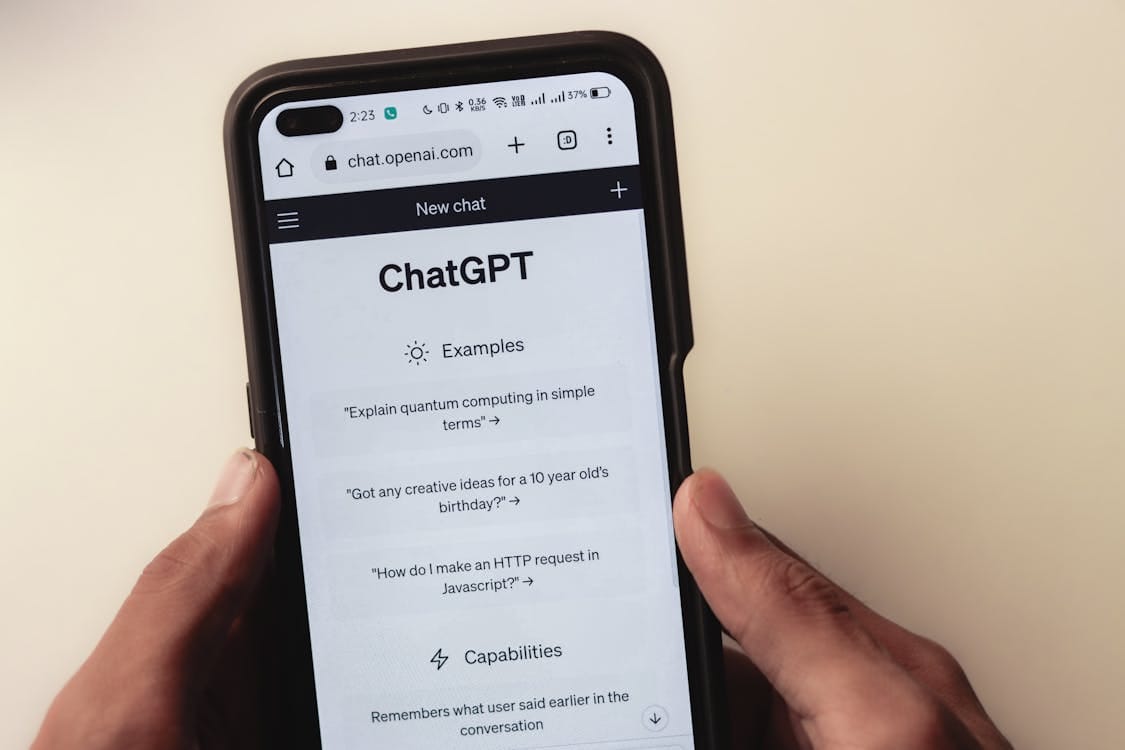
What is a AI chatbot?
An AI chatbot is software that understands text messages or voice inputs from users using artificial intelligence and natural language processing (NLP) and generates meaningful responses in real time. Unlike rule-based chatbots, which only follow predefined processes, an AI chatbot recognizes the intent behind a question — even when it is formulated unexpectedly.
40 million AI-powered sessions have already been processed through branchly alone — a sign of how strongly the technology is establishing itself in the European SME sector (Source: branchly, 2026).
How does an AI chatbot work?
An AI chatbot works in several steps, occurring in milliseconds:
Understand input (Intent Detection): The chatbot analyzes the user's message and recognizes the intent behind it — e.g., "I am looking for a product" vs. "I have a problem with my order."
Build context: Modern AI chatbots remember the conversation history. If you first ask about a product and then "What does it cost?", the bot knows what "it" refers to.
Generate response: Generative AI models (like Large Language Models) formulate a response in natural language — not from a rigid script, but based on the content available to the bot (e.g., product catalogs, FAQ databases, website content).
Execute action: Depending on the integration, the chatbot can also trigger actions — open a form, book an appointment, recommend a product, or forward to a human employee.
Learn and optimize: Data is generated from every interaction: Which questions come up frequently? Where do users drop off? This data helps you improve the bot and your entire website.
At branchly, the AI chatbot operates as part of an integrated AI layer — it not only accesses FAQ texts but also understands the entire website content, product catalog, and connected data sources. This makes the difference between a generic responder and a true digital consultant.
AI Chatbot vs. Rule-based Chatbot
Feature | Rule-based Chatbot | AI Chatbot |
|---|---|---|
Language Understanding | Only recognizes exact keywords or menu selections | Understands natural language, typos, colloquial language |
Response Generation | Predefined text modules | Generates individual responses from existing content |
Context | No memory — every message is treated in isolation | Remembers the conversation history |
Multilingualism | Each language must be created manually | Responds natively in 101+ languages (at branchly) |
Maintenance Effort | High — every new question must be manually integrated | Low — the bot learns from existing content |
Interaction Rate | 0.5–1 % in typical widget implementations | 5–10 % as a widget, up to 45–50 % in embedded display |
User Experience | Frustrating with unexpected questions | Natural and conversational |
Data & Insights | Barely usable data | Detailed behavioral analyses and visitor intentions |
The interaction rates speak a clear language: Classic chatbot widgets achieve 0.5–1 % of website visitors in various sectors. branchly chatbots achieve 5–10 % as a widget — and even 45–50 % when embedded within a page (Source: branchly customer data, 2026). The reason: Users realize that the bot actually understands their questions, and they stay in the conversation.
Why AI Chatbots are Important for European Companies
Getting More from Existing Traffic
Most medium-sized companies are already investing in SEO, ads, and content — but a large portion of visitors leave the website without converting. An AI chatbot intercepts these visitors: it answers product questions, navigates through complex offers, and qualifies leads — around the clock, in every language.
Data that No Other Tool Provides
Every chat interaction reveals what your visitors are really looking for — not what you think they are looking for. branchly analyzes this interaction data and shows you: Which products are most frequently inquired about? Where are there knowledge gaps on your website? What questions do visitors ask that never make it to the contact form?
GDPR and EU AI Act
For European companies, data protection is not optional. While US-based AI tools regularly transfer data to third countries, branchly operates on Microsoft Azure in European data centers — GDPR compliant, EU AI Act compliant, and WCAG accessible. This means: no risk with data protection audits, no discussions with the legal department.
Relieving Support Without Losing Quality
According to a Bitkom study (2025), 58 % of German companies are already using AI-based customer communication or planning to do so. The reason: A well-implemented AI chatbot answers 60–80 % of recurring inquiries, allowing your support team to focus on cases that require real human advice.
AI Chatbot in Practice: Typical Use Scenarios
E-Commerce
A visitor asks: "Which laptop is suitable for video editing under €1,500?" — the AI chatbot searches the product catalog, filters by criteria, and recommends suitable models with links to the product page. At branchly, this is handled by the Advisor mode — a combination of chatbot and AI-supported product advice.
Tourism
Visitors to a tourism website ask in their language: "What are family-friendly activities in the area?" — the AI chatbot responds in English, even though the website only exists in German. branchly natively supports 101 languages without you having to provide translated content.
Financial Services
An AI chatbot answers frequently asked questions about account models, fees, or processes — and simultaneously qualifies leads through intelligent follow-up questions. Sensitive queries are automatically forwarded to a human advisor. GDPR compliance and auditability are a must, not an option.
Related Terms
What is a AI chatbot in simple words?
An AI chatbot is a digital conversation partner on your website that understands visitors' questions and answers them in natural language — not through rigid menus, but through real language understanding. It uses artificial intelligence to recognize intents and generate suitable responses from your content.
What is the difference between an AI chatbot and a regular chatbot?
A regular (rule-based) chatbot follows predefined decision trees: It only recognizes exact keywords and responds with text blocks. An AI chatbot understands natural language, recognizes intents even with unexpected phrasing, and generates individual responses.
What is the typical interaction rate of an AI chatbot?
Industry-standard chatbot widgets reach 0.5–1% of website visitors. AI-based chatbots like branchly achieve 5–10% as a widget — a tenfold difference. If the chat interface is firmly embedded into a page, interaction rates increase to 45–50%.
Is an AI chatbot GDPR compliant?
It depends on the provider. Many AI chatbot solutions from the USA transfer data to third countries, which is problematic under GDPR. European solutions like branchly run on servers in EU data centers (Microsoft Azure), are GDPR compliant, and meet the requirements of the EU AI Act.
How long does it take to set up an AI chatbot?
With modern platforms like branchly, you can create an AI chatbot in just a few minutes. The bot is connected to your website content, learns from it, and is immediately ready for use.
What languages does an AI chatbot support?
branchly supports 101 languages natively — the chatbot understands and replies in the visitor's language, even if your website only exists in German or English.
Can an AI chatbot replace human employees?
No — and it shouldn't. An AI chatbot handles recurring, well-structured inquiries (typically 60–80% of the volume) so your team can focus on advisory-intensive and sensitive cases.
What does an AI chatbot cost for companies?
Simple solutions start at 50–100 euros/month but usually only offer rule-based bots. Professional AI chatbot platforms for medium-sized businesses like branchly start at 499 euros/month (Starter) with 1,000 sessions per month.
How do I measure the success of an AI chatbot?
The key KPIs are: interaction rate, deflection rate, conversion rate, and user satisfaction (CSAT). branchly provides these metrics as part of the integrated visitor analysis.
What data does an AI chatbot collect?
An AI chatbot captures conversation content, search terms, click paths, and intents. With GDPR-compliant providers, this data is anonymized and processed exclusively in EU data centers.
Does an AI chatbot work without technical knowledge?
Yes. Modern AI chatbot platforms are designed so that marketing teams can operate them independently — without developer resources. With branchly, it’s enough to connect the chatbot to your website.